

1. What Is Risk Management?
Risk management is the process of identifying, assessing, and controlling potential threats that could affect a business. It helps organizations reduce uncertainty and protect their assets. Every successful business uses risk management to prepare for unexpected challenges.
2. Financial Risk
Financial risk involves the possibility of losing money due to poor cash flow, rising costs, market changes, or investment losses. Businesses can reduce financial risk by budgeting carefully, maintaining emergency funds, and monitoring expenses regularly.

3. Operational Risk
Operational risk comes from failures in daily business activities, such as equipment breakdowns, human errors, or supply chain disruptions. Strong internal controls, employee training, and regular maintenance help minimize these risks.
4. Market Risk
Market risk occurs when changes in customer demand, competition, or economic conditions affect business performance. Companies can manage market risk by conducting market research, diversifying products, and adapting to changing customer needs.

5. Legal and Compliance Risk
Businesses must follow laws and industry regulations to avoid legal problems. Failure to comply can lead to fines, lawsuits, and damage to the company’s reputation. Regular legal reviews and compliance training help reduce these risks.
6. Cybersecurity Risk
As businesses rely more on digital technology, cyber threats have become a major concern. Data breaches, hacking, and malware attacks can cause significant financial and reputational damage. Using strong passwords, security software, and employee awareness programs improves cybersecurity.

7. Risk Assessment Process
Risk assessment involves identifying potential risks, analyzing their likelihood, evaluating their impact, and deciding on the best response. This process helps businesses prioritize risks and allocate resources effectively to prevent major losses.
8. Benefits of Risk Management
Effective risk management improves business stability, supports better decision-making, and increases customer confidence. It also helps protect company assets, ensures business continuity, and creates opportunities for sustainable long-term growth.
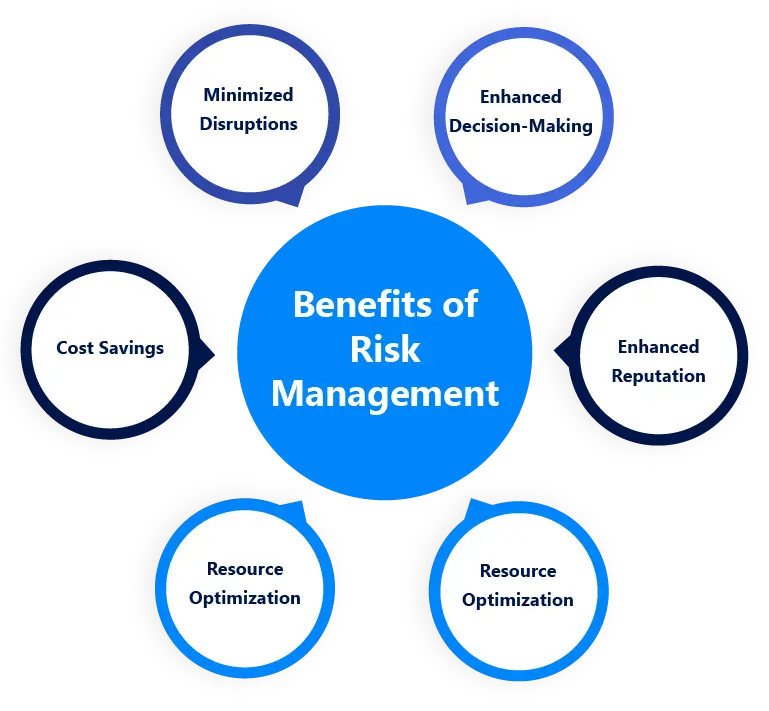
Implementing an effective risk management system provides several advantages:
- Reduces financial losses.
- Improves business continuity.
- Enhances customer and investor confidence.
- Supports better decision-making.
- Ensures legal and regulatory compliance.
- Protects company reputation.
Importance of Risk Management
Risk management plays a vital role in protecting business assets and ensuring smooth operations. It helps organizations avoid unexpected losses, improve decision-making, and maintain customer trust. Businesses with strong risk management practices are more likely to achieve sustainable growth in business and remain competitive in changing markets.
Conclusion
Risk management is an essential part of every successful business. By identifying potential risks, evaluating their impact, and implementing effective control measures, organizations can protect their resources and achieve long-term success. A proactive approach to risk management helps businesses remain resilient, competitive, and prepared for future challenges.
FAQs
1. What is risk management in business?
Risk management is the process of identifying, assessing, and controlling risks that may affect business operations.
2. Why is risk management important?
It helps reduce losses, improve decision-making, and protect business assets.
3. What are the main types of business risks?
Financial, operational, market, legal, and cybersecurity risks.
4. How can businesses reduce risks?
By identifying risks early, creating response plans, implementing controls, and regularly monitoring performance.
5. Who is responsible for risk management?
Business owners, managers, employees, and risk management teams all share responsibility for managing risks.