


What Is Brainstorming in Business?
Brainstorming is a creative thinking process used to generate new ideas, solve problems, and improve business decisions. It encourages team members to share ideas freely without fear of criticism.
Why Brainstorming Is Important
Brainstorming helps businesses discover innovative solutions, improve teamwork, and identify new opportunities. It promotes creativity and supports better decision-making.
Some reasons brainstorming is important include:
- Encourages innovative thinking
- Improves team communication
- Generates multiple solutions
- Increases employee involvement
- Supports better decision-making
- Helps businesses adapt to changing markets
When employees feel their ideas are valued, they become more motivated and engaged, creating a positive workplace culture.

Types of Brainstorming
Businesses can use different brainstorming methods, including individual brainstorming, group brainstorming, mind mapping, reverse brainstorming, and brainwriting. Each method suits different goals and team sizes.
Benefits of Brainstorming
Effective brainstorming leads to creative ideas, faster problem-solving, stronger collaboration, improved employee engagement, and better business growth.
Encourages Creativity
Employees think beyond traditional solutions and discover innovative approaches.
Improves Problem Solving
Multiple perspectives often produce stronger and more practical solutions.
Builds Teamwork
Employees collaborate, share knowledge, and respect different viewpoints.
Supports Innovation
New products, services, and marketing strategies often begin with brainstorming sessions.
Increases Employee Engagement
People become more motivated when they know their opinions matter.
Improves Decision-Making
Managers can compare multiple ideas before selecting the most effective solution.
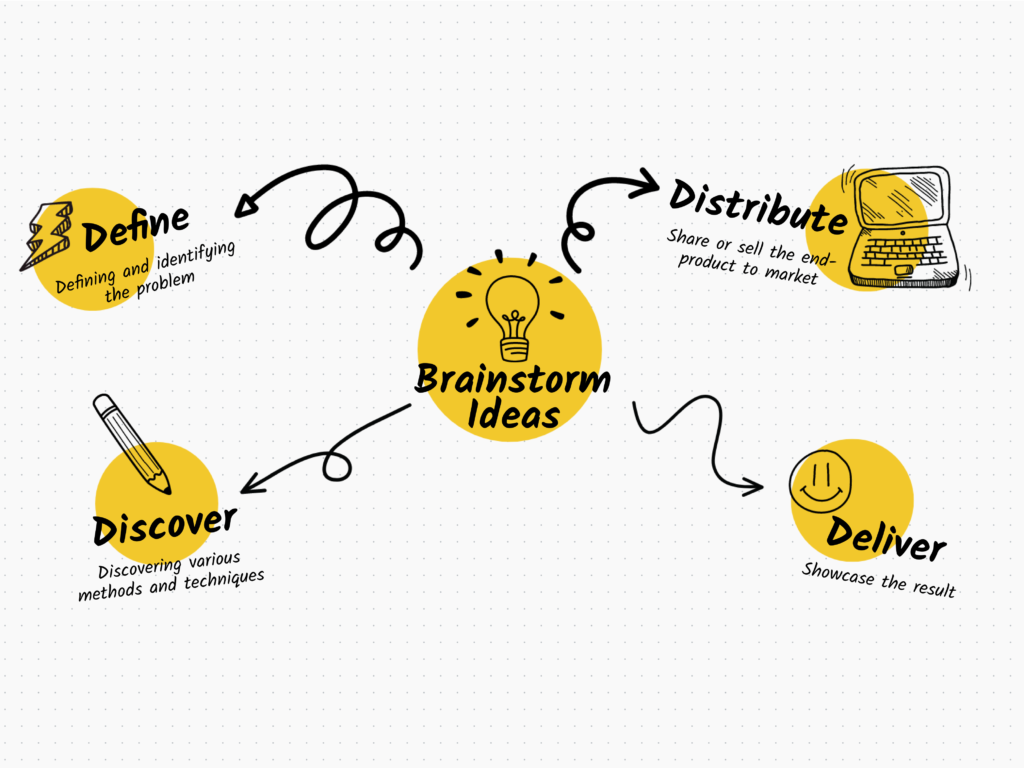
Steps in the Brainstorming Process
Start by defining the problem, gathering participants, encouraging open discussion, recording all ideas, evaluating the best options, and creating an action plan.
Brainstorming Techniques
Popular techniques include mind mapping, the SCAMPER method, the Six Thinking Hats approach, and the “5 Whys” technique. These methods help teams think from different perspectives.
Challenges of Brainstorming
Common challenges include dominant participants, lack of focus, limited creativity, and fear of criticism. A skilled facilitator can help overcome these issues.
Groupthink
Participants may agree with dominant opinions instead of expressing independent ideas.
Fear of Judgment
Some employees hesitate to share unusual ideas because they worry about criticism.
Lack of Preparation
Without a clear objective, brainstorming sessions become unproductive.
Dominant Personalities
Certain individuals may control discussions, preventing quieter participants from contributing.
Time Constraints
Limited meeting time may reduce creativity and idea development.
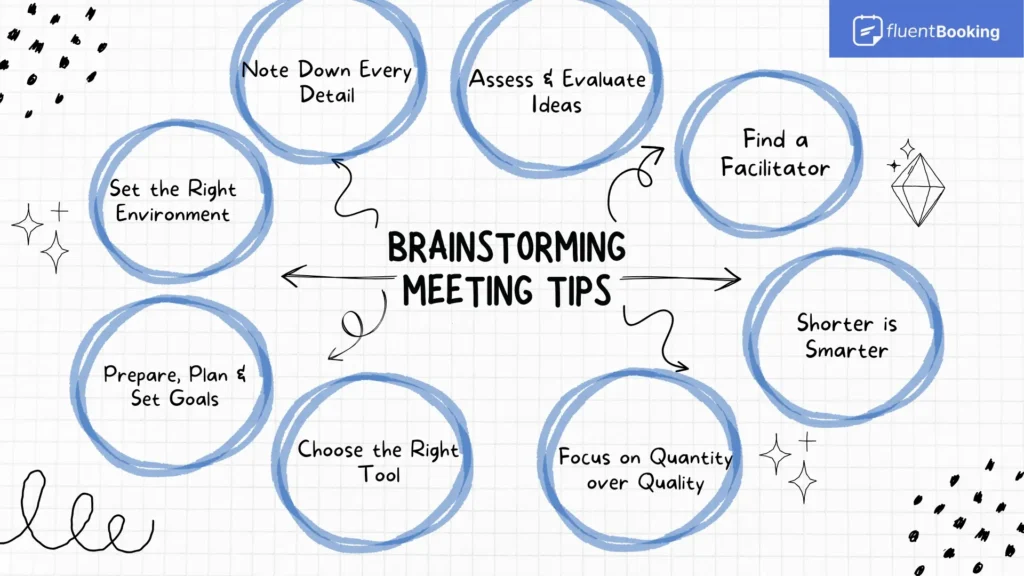
Tips for Successful Brainstorming
Create a comfortable environment, encourage every participant to contribute, avoid judging ideas during the session, build on others’ suggestions, and review ideas after the discussion.

Common Mistakes to Avoid
Many brainstorming sessions fail because organizations make avoidable mistakes.
Some common errors include:
- Criticizing ideas too early
- Inviting too many participants
- Having unclear objectives
- Ignoring quieter team members
- Failing to document ideas
- Never implementing selected solutions
Avoiding these mistakes significantly improves brainstorming effectiveness.
Conclusion:
Brainstorming is an essential business tool that encourages innovation and teamwork. By using structured brainstorming techniques, businesses can generate valuable ideas, solve problems effectively, and stay competitive in today’s changing market.
Organizations that encourage open communication, value creativity, and implement effective brainstorming techniques are more likely to remain competitive in an ever-changing marketplace. By making brainstorming a regular part of business strategy, companies can unlock new opportunities, strengthen teamwork, and achieve long-term success.
FAQs:
1. What is brainstorming in business?
Brainstorming is a creative process where individuals or teams generate multiple ideas to solve business problems or identify new opportunities.
2. Why is brainstorming important for companies?
It encourages innovation, improves teamwork, supports better decision-making, and helps businesses develop creative solutions.
3. What are the main brainstorming techniques?
Popular techniques include mind mapping, brainwriting, reverse brainstorming, SCAMPER, SWOT analysis, and the Six Thinking Hats method.
4. What are the biggest challenges during brainstorming?
Common challenges include fear of criticism, dominant participants, groupthink, lack of preparation, and unclear objectives.
5. How can businesses improve brainstorming sessions?
Businesses should create a positive environment, encourage participation from everyone, avoid early criticism, record every idea, and evaluate solutions after the creative phase.