

Develop Problem-Solving Skills in Business:
Why Problem-Solving Matters in Business
Every business faces problems, whether it is a small startup, a growing company, or a large organization operating across multiple markets. Customers may become dissatisfied, employees may struggle with productivity, cash flow may become tight, competitors may introduce better products, or an unexpected change in the market may force the business to rethink its strategy.
The difference between a business that survives these challenges and one that struggles is often its ability to identify problems early and solve them effectively. Problem-solving is not simply about fixing something after it goes wrong; it is a valuable business skill that helps leaders anticipate challenges, make smarter decisions, and create stronger systems. When you develop problem-solving skills in business, you become better prepared to respond to uncertainty without allowing every obstacle to become a crisis.
The Role of Critical Thinking
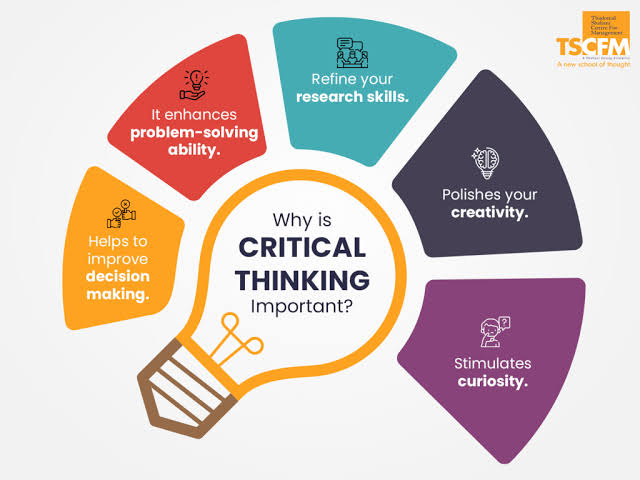
Critical thinking is one of the foundations of effective business problem-solving. It means looking beyond the obvious answer and examining a situation carefully before making a decision. A business leader may notice that sales have fallen and immediately assume that the price is too high, but that conclusion may be incorrect. Perhaps customers are not aware of the product, the sales team needs better training, a competitor has improved its service, or the target market has changed.
Without critical thinking, a business can easily solve the wrong problem. The best solution is useless if it addresses a symptom instead of the real cause.
Problems as Opportunities for Growth
A problem is often a signal that something in the business needs to change. That does not mean every problem is good, but almost every problem can teach you something valuable if you analyze it properly. For example, repeated customer complaints about delayed deliveries may reveal weaknesses in inventory management, communication, or logistics.
Rather than treating every complaint as an isolated incident, a smart business can look for the pattern behind the complaints. Once the underlying weakness is identified, the company can redesign its process and potentially improve the customer experience for everyone.
How to Identify Business Problems Clearly
Before solving a problem, you need to define it correctly. This sounds simple, but businesses often make decisions based on vague descriptions such as “sales are bad,” “customers are unhappy,” or “employees are not productive.” These statements may describe the situation, but they do not clearly identify the problem. A better approach is to make the issue specific and measurable.
Instead of saying, “Sales are bad,” you might define the problem as, “Monthly sales have declined by 15% over the last three months among our existing customer segment.” This version gives the team something concrete to investigate.

Find the Root Cause
Finding the root cause is one of the most important problem-solving skills in business. A root cause is the underlying reason that allows a problem to occur or continue. Consider a business that frequently misses delivery deadlines. The obvious response might be to tell employees to work faster. However, the real cause could be inaccurate inventory records, inefficient scheduling, insufficient staffing, poor communication between departments, or an unreliable supplier.
If management only tells employees to work faster, the problem may continue because the underlying system has not changed.One practical technique is to repeatedly ask “Why?” until you move beyond the surface-level symptom. If customers are receiving orders late, ask why.
Separate Symptoms From Causes
Symptoms are visible signs that something is wrong, while causes explain why the problem exists. Confusing the two can lead to expensive mistakes. For example, high employee turnover is a symptom, not necessarily the root problem. The cause could be low salaries, poor management, limited career opportunities, excessive workload, weak company culture, or a combination of several factors. If the company responds by offering a small salary increase when the real issue is poor management, the turnover problem may remain.

Build a Structured Problem-Solving Process
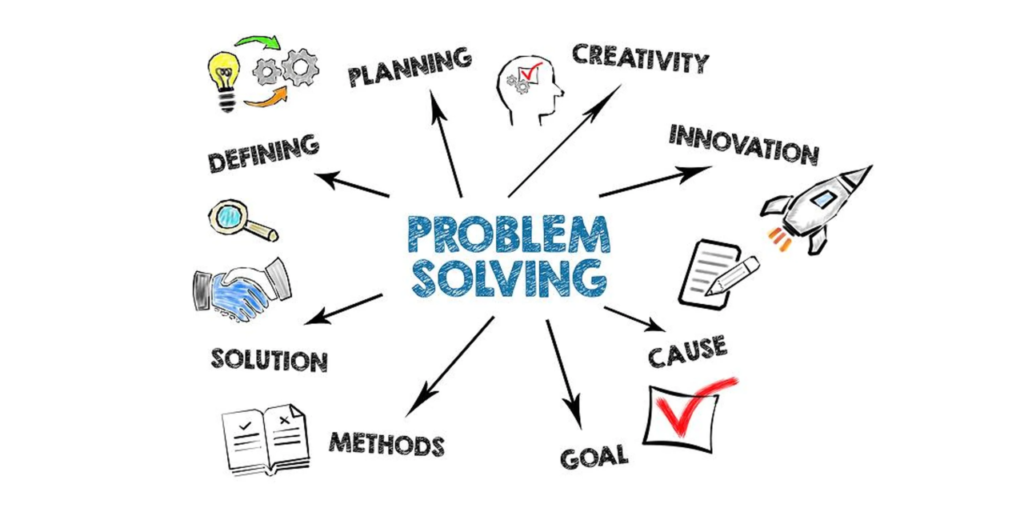
A structured process gives businesses a repeatable way to handle challenges. Without a process, teams may react differently to every problem, which can create confusion and inconsistent decisions. A basic problem-solving framework can include identifying the issue, collecting information, analyzing causes, generating solutions, evaluating options, implementing the best solution, and measuring the outcome. The process does not need to be complicated. In fact, simple frameworks are often easier for teams to use consistently.
Define the Problem
Start by writing the problem in one clear statement. Include relevant information such as what is happening, where it is happening, when it started, and who is affected. Avoid including an assumed solution in the problem statement. For example, “We need to hire more salespeople” is not a problem statement; it is a proposed solution. A better statement might be, “Our sales team is missing quarterly targets because qualified leads are not being converted at the expected rate.”
Collect Relevant Information
Good decisions require reliable information. Before choosing a solution, collect data that helps you understand the situation. This could include customer feedback, sales records, employee surveys, operational reports, financial information, or performance metrics. The type of information you need depends on the problem. A customer service issue may require analyzing support tickets, while a cash-flow problem may require reviewing payment cycles and expenses.
Develop Creative Solutions
Once you understand the problem and its causes, the next step is to generate possible solutions. This is where creativity becomes an important business skill. Many organizations make the mistake of searching for one “perfect” answer immediately.
Creative problem-solving does not always mean inventing something revolutionary. Sometimes the best solution is surprisingly simple. A business may improve customer service by changing one communication process, reduce costs by eliminating an unnecessary step, or improve productivity by reorganizing responsibilities. The key is to look at the situation from different angles. Ask yourself what could be changed in the product, process, people, technology, pricing, or customer experience. A wider perspective can reveal solutions that would otherwise remain hidden.
Encourage Brainstorming
Brainstorming works best when people feel safe enough to share ideas without immediate criticism. If every suggestion is rejected as soon as it is mentioned, employees will quickly stop contributing. During the idea-generation stage, the objective is to create possibilities rather than judge them. Evaluation should come later, after the team has enough ideas to compare.
A productive brainstorming session can begin with a clear question, such as, “What are five different ways we could reduce customer waiting time?” The team can then explore conventional and unconventional ideas. Afterward, the suggestions can be grouped, combined, and evaluated. This process often produces better results than asking one person to solve everything alone. Different experiences create different perspectives, and those perspectives can reveal opportunities that a single decision-maker may overlook.

Consider Multiple Perspectives
A business problem rarely affects only one department. A change that improves sales may create extra pressure on operations. A cost reduction may affect product quality. A new technology may improve efficiency but require employee training. This is why effective problem-solving should consider the perspectives of everyone who is directly or indirectly affected.
Make Better Business Decisions
After generating solutions, you need to decide which option offers the best balance of benefits, costs, risks, and feasibility. This is where problem-solving and decision-making come together. A good solution should address the root cause, fit the organization’s resources, and produce a meaningful improvement. Sometimes the most ambitious solution is not the best choice because it requires too much time, money, or operational disruption.
Evaluate Risks and Benefits
Every business decision involves some level of uncertainty. Even a well-researched solution can produce unexpected results. Effective problem solvers do not try to eliminate all risk; they identify, evaluate, and manage it. Ask what could go wrong, how likely the risk is, and what the consequences would be if it occurred. Then consider whether you can reduce the risk through testing, preparation, or a backup plan.
Use Data to Support Decisions
Data can make business problem-solving more objective. Metrics help leaders understand trends, compare performance, and measure whether a solution is working. Depending on the business, useful indicators may include revenue, conversion rates, customer retention, employee turnover, delivery times, customer satisfaction, or operating costs.
Improve Team Problem-Solving
Businesses become stronger problem solvers when the entire team develops the skill, not just senior leadership. Employees who are encouraged to identify problems and suggest improvements can become an important source of innovation. They often notice inefficiencies because they interact with processes every day. If leadership creates an environment where employees can speak honestly about challenges, problems can be identified earlier and addressed before they become expensive.

Create a Culture of Open Communication
Open communication is essential for effective problem-solving. Employees should be able to report mistakes, raise concerns, and question inefficient processes without automatically fearing punishment. This does not mean accountability disappears. It means the organization distinguishes between honest mistakes, poor performance, and intentional misconduct.
Leaders play a major role in setting this tone. If managers respond to every problem with anger or blame, employees may hide information. Hidden problems rarely become smaller. They usually grow quietly until they become impossible to ignore. A healthy business culture makes it easier to say, “We have a problem,” because everyone understands that identifying the issue is the first step toward fixing it.
Learn From Mistakes
Mistakes are inevitable in business, but repeating the same mistake is avoidable. After a problem has been addressed, take time to review what happened. What worked? What failed? What should be changed next time? What warning signs were missed? These questions can turn an unpleasant experience into useful organizational knowledge.
Measure the Results of Solutions
Implementing a solution is not the end of the problem-solving process. You need to determine whether the solution actually worked. Establish specific measures before implementation whenever possible. If you are trying to reduce customer complaints, track complaint volume and satisfaction. If you are trying to improve productivity, monitor relevant output and quality metrics.
Business problem-solving is often an iterative process rather than a single event. Test, measure, learn, and improve is a powerful cycle for long-term business growth.

Common Problem-Solving Mistakes to Avoid
One of the most common mistakes is reacting too quickly. When a problem appears, the pressure to “do something” can be intense. However, action without understanding can make the situation worse. Another common mistake is relying on assumptions instead of evidence. Just because a problem appears to have an obvious cause does not mean that cause is correct.
Businesses should also avoid blaming individuals before understanding the system. A mistake made by one employee may actually reveal weaknesses in training, communication, workload, or process design. Focusing exclusively on blame can prevent the organization from learning. They are willing to adjust, experiment, and improve. This flexibility is especially important in competitive markets where customer expectations, technology, and economic conditions can change quickly.
Conclusion:
Learning to develop problem-solving skills in business is one of the most valuable investments a leader or entrepreneur can make. Problems are unavoidable, but the way you respond to them can determine the future of your organization. By defining problems clearly, finding root causes, collecting relevant information, encouraging creative thinking, evaluating risks, using data, and measuring results, businesses can turn challenges into opportunities for improvement. Strong problem-solving is not about having all the answers immediately; it is about having a reliable process for finding better answers.
FAQs:
1. Why is problem-solving important in business?
Problem-solving is important because businesses constantly face challenges involving customers, employees, finances, operations, competition, and changing markets.
2. What are the main steps in business problem-solving?
The main steps include identifying and defining the problem, collecting relevant information, finding the root cause, generating possible solutions, evaluating risks and benefits, selecting an appropriate solution, implementing it, and measuring the results.
3. How can entrepreneurs improve their problem-solving skills?
Entrepreneurs can improve by practicing critical thinking, asking better questions, studying business data, listening to customers, seeking feedback from employees, and learning from mistakes. They can also use brainstorming and root-cause analysis to explore problems from different perspectives.
4. How does teamwork improve problem-solving?
Teamwork brings together people with different experiences, skills, and viewpoints. Employees working directly with customers or business processes may notice problems that managers cannot see from a distance.
5. What is the biggest mistake businesses make when solving problems?
One of the biggest mistakes is treating the symptom instead of finding the root cause. Businesses may rush to implement a quick fix without investigating why the problem exists. This can cause the same issue to return repeatedly.