


Entrepreneurship and Poverty Reduction
- The global poverty landscap
- Why entrepreneurship matters now more than ever
Understanding Poverty: Beyond Income
- Multidimensional poverty explained
- Social, economic, and structural barriers
What Is Entrepreneurship? A Practical Perspective
- Traditional vs. modern entrepreneurship
- Necessity-driven vs. opportunity-driven ventures
The Direct Link Between Entrepreneurship and Job Creation
- Small businesses as employment engines
- Local economic multipliers
Entrepreneurship as a Tool for Financial Inclusion
- Microfinance and microenterprises
- Digital banking and mobile money
Women Entrepreneurship and Poverty Alleviation
- Empowering women economically
- Community-level ripple effects
Youth Entrepreneurship: Breaking the Cycle Early
- Tackling youth unemployment
- Innovation-driven growth
Social Entrepreneurship and Community Impact
- Profit with purpose
- Solving systemic social problems
Rural Entrepreneurship and Agricultural Innovation
- Agribusiness opportunities
- Reducing rural-urban migration
The Role of Education and Skill Development
- Entrepreneurial mindset
- Vocational training and mentorship
Government Policies That Support Entrepreneurial Growth
- Regulatory frameworks
- Tax incentives and grants
Access to Capital: The Lifeline of Small Businesses
- Angel investors and venture capital
- Crowdfunding and cooperative financing
Technology and Digital Transformation in Entrepreneurship
- E-commerce and global markets
- Digital tools for small businesses
Challenges Entrepreneurs Face in Low-Income Communities
- Infrastructure gaps
- Market access limitations
Measuring the Impact of Entrepreneurship on Poverty Reduction
- Key performance indicators
- Long-term sustainability metrics
Case Studies: Real-World Success Stories
- Developing countries
- Developed economies
The Future of Entrepreneurship in Ending Poverty
- Sustainable development goals
- Innovation ecosystems
Entrepreneurship and Poverty Reduction
1. Introduction to Entrepreneurship and Poverty Reduction
Poverty is not just a statistic you see in global reports—it’s a daily reality for millions of people. It’s the mother skipping meals so her children can eat. It’s the graduate who can’t find work. It’s the community stuck in a cycle that feels impossible to break. Now here’s the big question: what if the solution isn’t just more aid, but more opportunity?
That’s where entrepreneurship steps in.
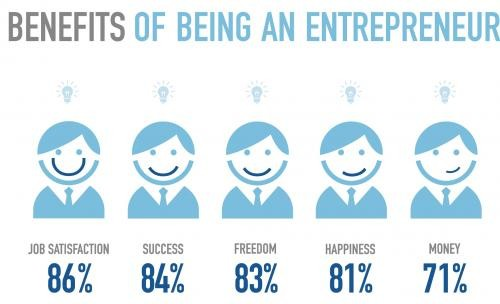
Entrepreneurship and poverty reduction are deeply connected. When individuals start businesses, they don’t just change their own lives—they create jobs, generate income, and stimulate economic activity around them. A small tailoring shop in a rural village can employ apprentices. A food delivery startup in an urban slum can hire riders. A digital freelancer in a low-income country can earn globally competitive income from a laptop.
Unlike traditional aid models that often create dependency, entrepreneurship fosters independence. It equips people with tools to build their own futures. Think of it like planting seeds instead of handing out fruit. One feeds you for a day. The other feeds you for years.
But this isn’t just theory. Across developing nations and even in underserved communities in wealthy countries, small and medium-sized enterprises (SMEs) account for over 90% of businesses and more than half of employment worldwide. That’s not a coincidence—it’s proof.
2. Understanding Poverty: Beyond Income
When most people hear the word “poverty,” they think about money. Or rather, the lack of it. But poverty is much more complex than a low bank balance. It’s multidimensional. It’s layered. And unless we understand that, we can’t fully appreciate how entrepreneurship helps solve it.
Poverty includes limited access to:
- Quality education
- Healthcare services
- Clean water and sanitation
- Stable housing
- Financial systems
- Technology and infrastructure
Imagine trying to start a business without electricity, internet, or access to credit. Sounds impossible, right? Yet millions attempt it every day.
There are two main dimensions of poverty:
- Absolute poverty – The inability to meet basic needs like food, shelter, and clothing.
- Relative poverty – Living below the average standard of living within a specific society.
Entrepreneurship addresses both forms.
For those in absolute poverty, starting even a small microenterprise—selling produce, handmade goods, or offering services—can provide immediate income. For those facing relative poverty, entrepreneurship creates pathways to upward mobility, allowing individuals to climb the socioeconomic ladder.

3. What Is Entrepreneurship? A Practical Perspective
Entrepreneurship isn’t just about Silicon Valley startups or billion-dollar tech unicorns. At its core, entrepreneurship is simple: it’s the act of identifying a problem and creating a solution that people are willing to pay for.
That solution could be:
- A small grocery kiosk in a remote village
- A mobile phone repair service
- A tech platform connecting farmers to buyers
- A local transportation service
Entrepreneurship comes in two primary forms:
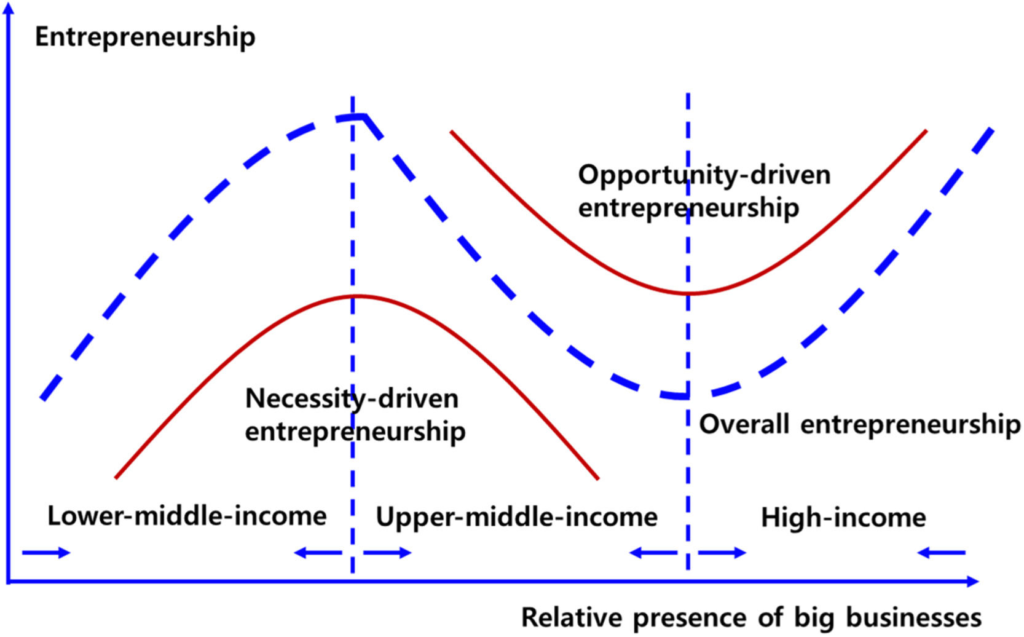
Necessity-Driven Entrepreneurship
This happens when individuals start businesses because they have no other employment options. In many low-income regions, this is common. Someone might sell street food because formal jobs are scarce. It’s survival-driven, but it’s still powerful.
Opportunity-Driven Entrepreneurship
This occurs when individuals identify a market gap and pursue it, even if they have other employment options. This type often leads to innovation and higher growth businesses.
Both forms matter in poverty reduction.
Necessity-driven ventures provide immediate income and stability. Opportunity-driven businesses create scalable growth and employment for others. Together, they form the backbone of economic resilience.
Entrepreneurship also involves risk-taking, innovation, and resourcefulness. It’s about making something from almost nothing. And that’s particularly relevant in low-income communities, where resources are limited but creativity is abundant.
Here’s the beauty of entrepreneurship: it doesn’t require permission. It requires initiative.
4. The Direct Link Between Entrepreneurship and Job Creation
If poverty is largely about lack of income, then jobs are the bridge out. And who creates most jobs globally? Not giant corporations. Not governments. It’s small businesses.
Small and medium-sized enterprises are often called the “engine of the economy” for a reason. They generate the majority of employment opportunities worldwide. When someone starts a business, even a small one, they rarely work alone for long.
Here’s how the process typically unfolds:
- A person starts a microenterprise.
- Demand grows.
- They hire one assistant.
- The business expands.
- More employees join.
That’s organic job creation in action.
And the impact doesn’t stop there. There’s something economists call the multiplier effect. When employees earn wages, they spend money locally—on food, housing, transportation, education. That spending supports other local businesses, which may then hire more people. One business can spark an entire ecosystem.
In low-income communities, this effect is even more pronounced because local economies are tightly interconnected. A tailoring business might rely on a local fabric supplier. The supplier buys from local traders. The chain continues.
Compare this to large corporations that often centralize profits and outsource operations. Small businesses, on the other hand, tend to reinvest locally.
FAQs:
1. How does entrepreneurship directly reduce poverty?
Entrepreneurship reduces poverty by creating income-generating opportunities for individuals and communities. When someone starts a business—whether it’s a small retail shop, a farming enterprise, or a digital service—they generate revenue not only for themselves but often for others through employment. This leads to job creation, improved household income, and stronger local economies.
Beyond income, entrepreneurship also builds skills, confidence, and financial independence. It empowers individuals to move from economic vulnerability to stability. As businesses grow, they contribute to local tax systems, infrastructure development, and social services, creating a broader cycle of economic improvement. In short, entrepreneurship transforms individuals from job seekers into job creators, which is a powerful tool in breaking the cycle of poverty.
2. What types of entrepreneurship are most effective in reducing poverty?
Both necessity-driven and opportunity-driven entrepreneurship play important roles in poverty reduction. Necessity-driven entrepreneurship—such as small street vending, home-based services, or farming—helps individuals survive and generate immediate income in areas with limited job opportunities.
Opportunity-driven entrepreneurship, on the other hand, focuses on innovation and scalable growth. These ventures often create more jobs and bring long-term economic transformation to communities. Social entrepreneurship is also highly effective, as it combines profit-making with solving social issues like education, healthcare, and access to clean water.
3. Can entrepreneurship alone eliminate poverty?
Entrepreneurship is a powerful tool, but it cannot eliminate poverty on its own. It works best when supported by strong institutions, education systems, access to healthcare, financial services, and favorable government policies.
Think of entrepreneurship as a key piece of the puzzle. It unlocks opportunity and drives economic activity, but long-term poverty reduction requires collaboration between governments, private sectors, educational institutions, and communities.
4. How does women’s entrepreneurship contribute to poverty reduction?
Women’s entrepreneurship has a multiplier effect on poverty reduction. When women earn income, they are more likely to invest in their families’ education, healthcare, and nutrition. This leads to improved living standards and better long-term outcomes for children.
Supporting women entrepreneurs also reduces gender inequality and increases overall economic productivity. Studies show that when women participate fully in economic activities, national GDP can significantly increase.
5. What role does access to finance play in entrepreneurship and poverty reduction?
Access to finance is critical for entrepreneurship to succeed. Many low-income individuals have business ideas but lack the capital to start or expand their ventures. Microloans, small business grants, crowdfunding, and cooperative savings programs can provide the initial funding needed.
Financial inclusion—such as access to banking services and digital payment systems—also allows entrepreneurs to manage cash flow, save securely, and build credit history. Without access to financial tools, businesses struggle to grow and scale.
Conclusion:
Entrepreneurship is more than just starting a business—it is about creating opportunity where little or none exists. In the fight against poverty, it stands out as one of the most practical, scalable, and sustainable solutions available today. Rather than relying solely on aid or temporary assistance, entrepreneurship equips individuals with the tools, skills, and confidence to build their own economic stability.
When people launch small businesses, they generate income not only for themselves but also for others through job creation. Local enterprises stimulate community economies, encourage innovation, and strengthen financial independence. Over time, this leads to improved living standards, better access to education and healthcare, and greater social mobility. In essence, entrepreneurship transforms communities from within.
Please don’t forget to leave a review.
Explore more by joining me on Patreon
Continued in next response…